Misinformation has become a growing challenge in Somalia as social media platforms increasingly shape how people receive and share news. Facebook, TikTok, X, WhatsApp and other digital platforms allow information to reach large audiences within minutes. While this has expanded access to information, it has also made it easier for false or misleading claims to spread before they can be verified.
In Somalia, where political tensions, security concerns, clan relations and armed conflict can make information particularly sensitive, misinformation can have consequences that extend far beyond the internet.
The Nature of Misinformation in Somalia
Misinformation refers to false or inaccurate information that is shared regardless of whether there is an intention to deceive. It differs from disinformation, which generally involves deliberately creating or spreading false information to mislead others.
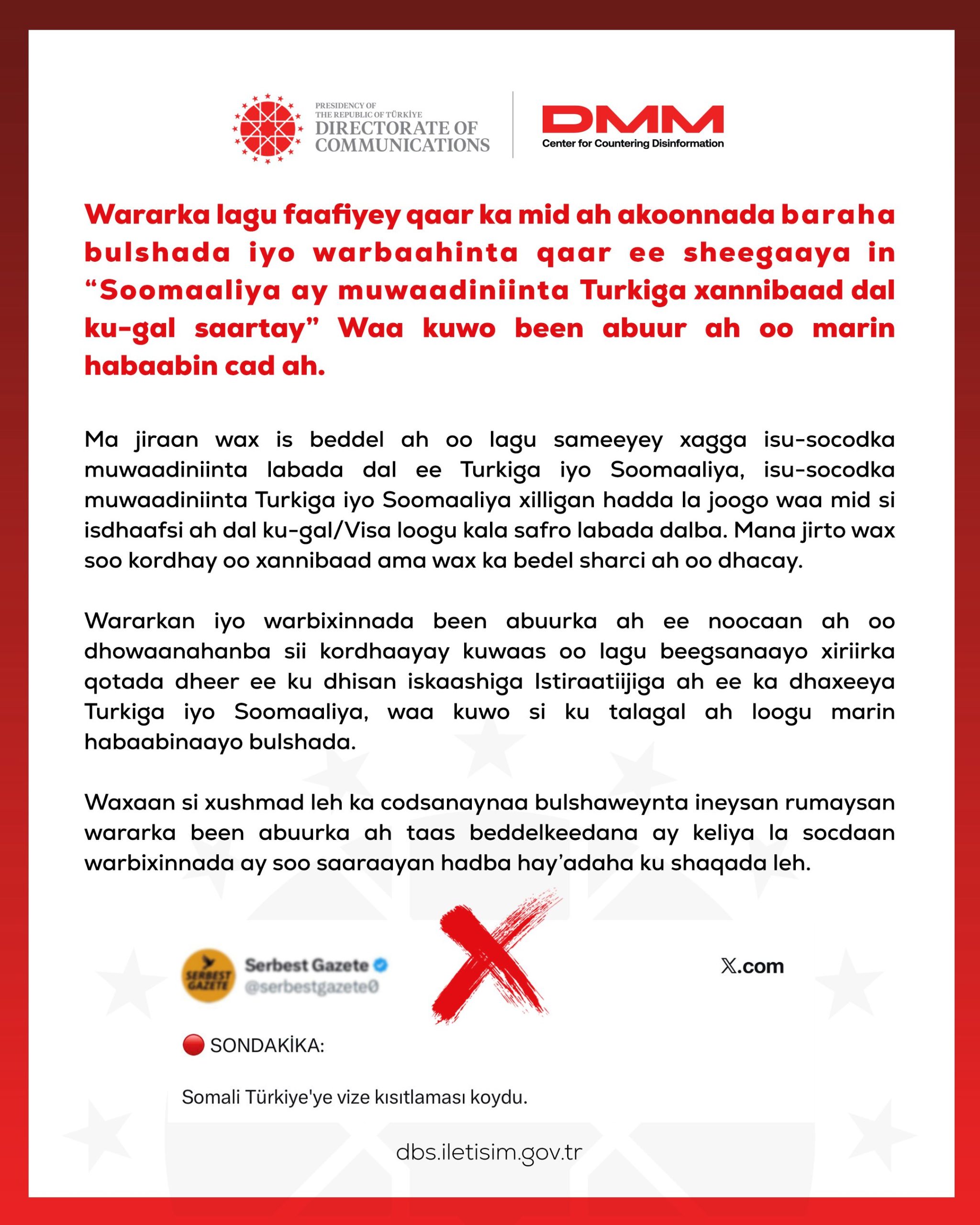
In Somalia, misinformation can take many forms. It may include false reports about security incidents, fabricated statements attributed to government officials, misleading political claims, manipulated photographs and videos, false health information, or rumours concerning relations between communities.
Social media has significantly increased the speed at which such information can circulate. A claim posted by one account can quickly be copied by other users, media pages and online influencers. In some cases, an unverified social media post can develop into what appears to be a widely reported story simply because many accounts repeat the same allegation.
The number of people sharing a claim, however, does not make it true.
Effects on Social Structures
One of the most serious consequences of misinformation is its ability to undermine trust.
Somali society depends heavily on relationships between families, communities, institutions and different sections of society. False information that targets particular communities or individuals can create suspicion and deepen existing divisions.
This risk becomes particularly serious when misinformation involves clan identity. An unverified allegation accusing one community of attacking, discriminating against or conspiring against another can quickly generate anger and hostility.
False security information can have similar consequences. Fabricated reports about military movements, attacks or armed confrontations can cause unnecessary fear among communities and potentially contribute to instability.
Once misinformation becomes widely accepted, correcting it can also be difficult. People may continue believing an original false claim even after credible evidence disproves it.
For this reason, misinformation should not be viewed simply as an online problem. In a fragile information environment, its consequences can affect relationships and behaviour in the real world.
Impact on Governance
Misinformation can also affect the relationship between citizens and public institutions.
Citizens have the right to scrutinise their government, question officials and receive accurate information about public affairs. However, when deliberately fabricated or inaccurate information becomes mixed with legitimate criticism, it becomes more difficult for the public to distinguish verified reporting from rumours.
False claims about government decisions, elections, security operations, public finances or diplomatic relations can distort public understanding of important national issues.
Misinformation can also damage public confidence in institutions. If citizens repeatedly encounter fabricated statements attributed to government agencies, they may become uncertain about which information is authentic.
The government, however, also has a responsibility.
Authorities should not label legitimate criticism, investigative journalism or political disagreement as “misinformation” simply because the information is uncomfortable or critical. Freedom of expression and independent journalism remain essential to accountable government.
The appropriate response to misinformation is therefore greater transparency, timely communication and evidence—not the suppression of legitimate public debate.
Security and Conflict
The consequences of misinformation become particularly dangerous during armed conflict.
Somalia continues to confront security threats, including terrorism. False information about military operations, casualties, territorial control or attacks can create panic and potentially interfere with security operations.
Extremist organisations can also exploit the information environment by spreading propaganda, manipulating events and attempting to undermine confidence in government institutions.
Old photographs and videos can be reposted as if they depict current events. Images from other countries can also be falsely presented as events occurring in Somalia.
During security incidents, journalists and social media users should therefore exercise greater caution before publishing information that has not been independently verified.
Speed should never replace accuracy.
Misinformation and Journalism
Professional journalism has an important role in reducing misinformation.
Journalists should verify information through multiple reliable sources, seek documentary or visual evidence where possible, contact relevant parties for comment and clearly distinguish between confirmed facts, allegations and opinions.
Media organisations should also correct significant errors transparently.
Fact-checking organisations can contribute by investigating viral claims, tracing the original sources of photographs and videos, reviewing official records and explaining misleading information to the public.
However, fact-checking is most effective when citizens themselves develop stronger media literacy.
People should learn to ask basic questions before sharing information:
Who published this information? What evidence is provided? Is the source credible? Have reliable media organisations reported it? Is the photograph or video authentic? Could the information be old or presented without its original context?
A few minutes of verification can prevent false information from reaching thousands of people.
Strategies for Mitigation
Addressing misinformation in Somalia requires cooperation between government institutions, journalists, technology platforms, civil society organisations and the public.
Government institutions should provide accurate information quickly, particularly during emergencies and major national events. Information gaps create opportunities for rumours to flourish.
Media organisations should strengthen editorial standards and avoid publishing social media claims simply because they are trending.
Journalists should receive additional training in digital verification, fact-checking, open-source investigation and the identification of manipulated or AI-generated content.
Schools and universities can also strengthen media literacy by teaching young people how to evaluate online sources and recognise misleading content.
Social media companies should improve their response to harmful misinformation in Somali-language content while ensuring that legitimate political speech and journalism are not unfairly restricted.
Most importantly, individual users have responsibility for what they share. Before reposting an allegation, photograph or video, users should consider whether the information has been verified and whether sharing it could unnecessarily harm another person or community.
Conclusion
Misinformation is not simply a problem of inaccurate social media posts. In Somalia, it can undermine public trust, damage reputations, deepen social divisions, distort political debate and, in serious circumstances, contribute to insecurity.
Combating misinformation does not mean restricting legitimate criticism or freedom of expression. Somalia needs both a free information environment and a responsible one.
Government institutions must communicate transparently, journalists must verify before publishing, technology platforms must address harmful manipulation, and citizens must think carefully before sharing unverified claims.